


Being a fairly common disease of the veins and arteries, varicose veins are accompanied by characteristic manifestations that allow you to timely diagnose the disease and prevent its worsening.There are certain stages of varicose veins, which are accompanied by certain symptoms and can become indicators of both the neglect of the pathological process and the opportunity to identify current changes.
However, phlebologists today do not have a consensus regarding the identification of the stages of the disease, since the identification of manifestations and their characteristic course is not a constant value: each case has its own characteristics of manifestation and course of this disease, and against the background of the current parallel lesions of the body there is a high probability of blurring of manifestations, which can interfere with the correct diagnosis.
Basic parameters for determining the stage of varicose veins
The stages of varicose veins are usually formed based on the totality of certain manifestations that characterize the degree of abandonment of the current pathological process, as well as their impact on the patient's body as a whole.Classification of the manifestations of this disease is the simplest method of making a preliminary diagnosis and determining a treatment regimen.
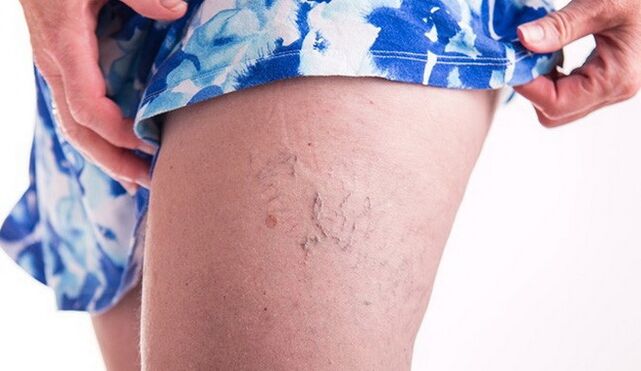
To determine the stage of this disease, it is necessary to answer a number of specific questions that will allow you to understand the existing symptoms and, with their help, determine the degree of worsening of the process, which largely determines the possibilities of treatment.
Such questions should include:
- the presence of characteristic manifestations of varicose veins and the degree of their manifestation;
- location and intensity of symptoms;
- the presence of external manifestations of changes in the condition of veins and large arteries;
- identification of concomitant manifestations that worsen the patient's condition.
However, even without a detailed diagnosis by the phlebologist, during the external examination of the patient a preliminary diagnosis can be made, which will allow drawing up a treatment plan and, depending on the specific individual characteristics of the patient's body, the presence of current concomitant diseases and susceptibility to the effect, to make some adjustments to the treatment.When diagnosing a patient's condition, it is important to determine what types of varicose veins occur, their location and the degree of neglect of the pathological process.
Most often, varicose veins affect the lower extremities, since it is this area of the human body that receives the most significant stress.At the same time, not everyone is aware of this load on the legs and does not take care of it, although there are a number of manifestations that signal the need for a more careful attitude to the limbs and veins.Therefore, to understand how the stages of varicose veins differ, it is necessary to gain at least a general knowledge of the manifestations of this pathology, which is distinguished by its severity and great dangers to the health of the legs and the human body as a whole.
Details of the classification of varicose veins
The stages of varicose veins can vary in the shape and location of the disease process occurring in the veins.This approach is more convenient for understanding the degree of neglect of the disease, and also allows you to determine the cause of its onset, which will allow you to more quickly eliminate the current manifestations of this condition and characteristic symptoms.
The types of varicose veins differ in several specific parameters.The use of a certain classification allows you to determine whether an existing disease belongs to a group, which facilitates further diagnosis and selection of a treatment system.The modern classification according to the location of the main nodes of varicose veins is as follows:
- Varicose veins are located in the superficial layer of the skin and deep veins, while external manifestations are characterized by segmentation: changes in the condition of the veins are noticed only in a certain area of the veins.
- Superficial and perforating varicose veins, which are also noted in some segments of the skin.
- Changes in the state of the veins, in which varicose veins and pathological changes in the superficial veins are diagnosed in an unexpressed form, reflux.
- Varicose veins observed in deep veins, the development of reflux.
The presence of reflux indicates the presence of a certain pathology, since with reflux the blood flows in the opposite direction.This phenomenon usually aggravates the pathological process of alteration of the veins, stimulating the worsening of varicose veins resulting in coverage of an increasingly larger area of veins and arteries.All types of varicose veins can show signs of reflux, which is already a defined pathology and requires medical intervention.
Understanding the severity of the disease allows you to start treatment in a timely manner, since even the initial stage of the process, which has a relatively small number of external manifestations, is dangerous for the health of the legs.1st degree varicose veins can be practically asymptomatic, but this does not mean that it is not necessary to treat the disease.
An external examination of the affected veins with changed veins will allow the specialist to approximately determine the probable cause of this disease.However, to clarify the diagnosis, it is necessary to undergo a full range of diagnostic procedures that will allow to establish the extent of the autological process, as well as adjust the expected therapeutic effect to achieve more pronounced and lasting positive results.The classification will help make a diagnosis based on the external manifestations of the disease, as well as determine the system of therapeutic effects.
Classification based on the degree of aggravation
Today, the generally accepted classification method should be considered a variant that divides the course of the disease into certain stages.Each of them has characteristic manifestations;with the onset of the next stage, a greater degree and intensity of symptoms and a greater prevalence of the affected area are noted.
The classification of the disease, which is carried out based on the degree of neglect, is as follows:
- initial stage of varicose veins - at the initial stage of the pathological process, there is a gradual accumulation of characteristic manifestations of the disease, which are not always noticed by the patient.This phase is often called latent: a person can attribute unpleasant sensations after a whole day spent on their feet to elementary tiredness or the presence of some excess weight.If to the listed factors we add the period of waiting for a child, heredity (if you have at least one close relative with existing varicose veins, you can safely assume your tendency to develop this disease in yourself), then you may not notice the pathological changes that appear in the veins of the lower extremities for a long time;
- the first stage is already characterized by such manifestations as periodic numbness of the legs (especially when holding a position and standing for a long time), pain in some areas of the legs, a feeling of tension in the legs and veins due to deterioration in the quality of the blood circulation process, the veins expand and strong tension occurs.Externally, the first stage of the disease is manifested by the appearance of small areas with visible veins and blood vessels, which can bother the patient when he presses on this area;
- 2nd degree varicose veins can present the following characteristic manifestations:
- the pain becomes more pronounced and increases towards the end of the day;
- Bruises and areas with altered veins and capillaries appear on the skin, visible even to the naked eye;
- the degree of damage increases, which is revealed by an increase in the damaged area.
- Grade 3 varicose veins are less treatable.All characteristic symptoms worsen, the pain becomes more intense, and the affected area covers most of the leg.The condition and color of the skin of the legs changes: they acquire a darker shade, the skin itself becomes unhealthy in structure, more and more resembles dead skin.At this stage, varicose veins almost always require surgery, as there is a high risk of a blood clot forming and detaching from the vessel wall, which can block the vessel lumen and lead to serious consequences such as the risk of limb amputation.The third stage is the most dangerous due to the high probability of concomitant negative manifestations during treatment.
In the second phase of this pathological process, a strong heaviness is felt in the legs, a feeling of distension of the veins and skin, so-called goosebumps may appear on the legs and in the popliteal region, which is not associated with external factors.Grade 2 varicose veins are still treatable;in the subsequent phases, the process of worsening of the disease occurs at an increasingly rapid pace and affects increasingly large areas of the lower limbs, while the treatment process is difficult and does not always give positive results;
There are also capillary varicose veins, in which small blood vessels receive stress, the quality of blood circulation gradually deteriorates, characteristic signs appear in the form of increased fatigue of the limb, the appearance of swelling of the affected tissues and changes in skin color at the site of the lesion.
Varicose veins have stages that gradually become more complicated, while the treatment method is determined by both the localization of the lesion and the subjective manifestations of the disease.Anyone who has noticed at least one of the signs of this terrible disease should remember that the probability that the disease will quickly progress to a more advanced stage and a significant deterioration in the health of the lower extremities is high.In addition, in the absence of the necessary treatment, the patient can become disabled - as medical statistics show, this takes on average about 11 years from the moment the first characteristic manifestations of the disease appear.
Why is treatment necessary?
Varicose veins of the lower extremities, or VVVV, accompanied by a gradual deterioration of blood circulation and the appearance of increasingly profound symptoms, require immediate medical intervention.When varicose veins of the lower extremities are detected, a more detailed diagnosis of the veins and vessels is performed and the degree of neglect of the process is determined.
Lower extremity disease requires treatment due to the rapid worsening of the current pathological process, which affects an increasing number of areas.The probability of remaining disabled is high, especially at an older age, when there is a general depression of the basic functions of the body and a decrease in the degree of resistance to diseases.And in the presence of concomitant injuries, the treatment of varicose veins on the legs becomes even more difficult.
Since the disease is characterized by several types (or stages), which differ in the degree of aggravation of the pathological process, treatment should be carried out based on the results of the diagnosis, as well as taking into account the individual characteristics of the body.